Introduction
Hotel furniture decisions affect more than the opening photograph. A chair has to work after repeated guest use and cleaning. A bedside cabinet has to fit the wall layout and leave access to outlets. A lobby table must suit circulation and remain stable in daily use. The purchasing team must also consider what happens when a piece is damaged, a room is refurbished or a later phase needs matching furniture.
“Custom or stock?” is therefore too simple a question. There are at least three practical routes: select an existing contract-ready product, modify an existing design, or develop a new item against a project specification. Each route can succeed or fail. Stock is not inherently lower quality, and custom is not inherently better. The right choice depends on fit, performance, approvals, schedule, quantity and the operator’s maintenance plan.
This guide is intended for hotel developers, interior designers, FF&E buyers, operators and importers. It offers a decision framework rather than invented project statistics or guaranteed lead times. Any examples below are illustrative procurement scenarios, not DIO SPACE case studies. Requirements differ by market and property, so the project team should confirm applicable standards and approval documents before ordering.
Understand the three procurement routes
Stock contract furniture
Stock furniture is an existing design available in defined dimensions, materials and finishes. It can be a strong choice when the item fits the room, the supplier can document suitability for the intended use, and the model has a credible replacement path. Ask what is actually in stock, where it is held, how long the quoted availability is valid and whether the exact finish can be reordered. “Catalogue item” does not always mean immediate delivery.
Stock often works well for secondary seating, loose tables, back-of-house items or a fast replacement requirement. The limitation is fit: a good-looking product may obstruct circulation, miss a height requirement or clash with installed millwork. A low upfront price does not compensate for difficult installation or a maintenance problem repeated across many rooms.
Modified standard furniture
A modified design starts with an existing construction but changes a defined element: fabric, finish, dimensions, hardware or base. This can preserve a proven manufacturing approach while giving the project more control over appearance and fit. It is not automatically simple. A different fabric may change seam behavior or documentation; a changed dimension may affect stability, packing or drawer construction. Ask the supplier which parts are standard and which are being re-engineered.
Modified standard furniture is often the middle path for room seating, dining furniture and selected casegoods. Its advantage depends on precise change control. A buyer should not assume that a stock item’s test report remains applicable after significant modifications; the supplier needs to confirm the scope of any evidence provided.
Fully custom furniture
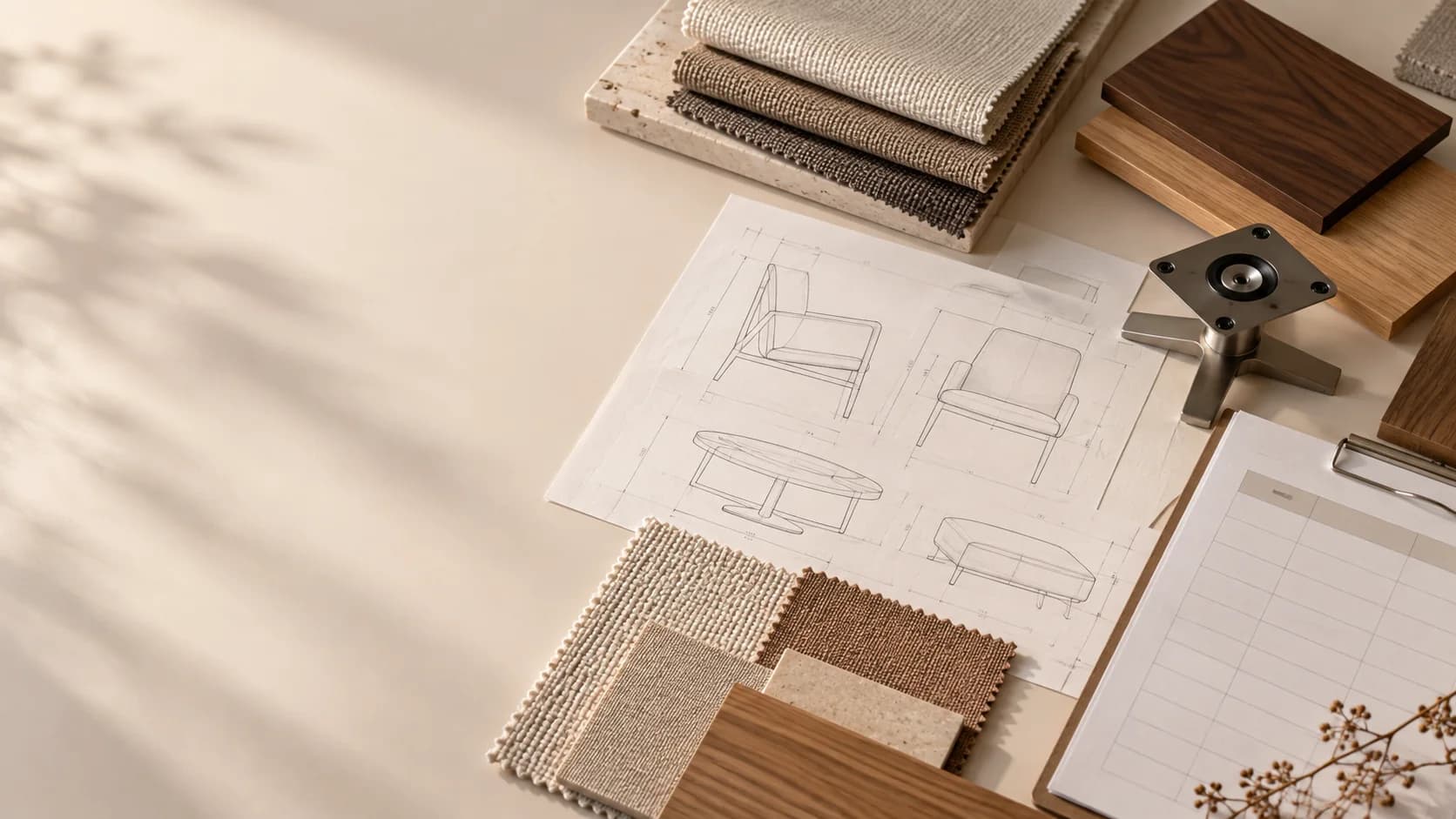
Custom furniture is developed against project drawings and requirements. It may solve a unique room constraint, create a signature guest experience or coordinate with millwork and services. The trade-off is more work before production: technical drawings, materials, samples, approvals, revisions and often a longer decision path. Schedule risk often comes from unresolved design choices as much as from manufacturing itself.
Custom is most valuable where the result cannot be achieved with a suitable existing design. That might be a built-in guestroom desk, a lobby focal piece, a banquette shaped to a floor plan or a cabinet that must clear fixed services. Before selecting custom, ask what difference the design needs to achieve and whether that difference justifies the development and future replacement burden.
Compare the options on six buyer questions
| Buyer question | Stock | Modified standard | Fully custom |
|---|---|---|---|
| Does it fit the room as drawn? | Verify actual dimensions | Verify revised drawing | Design to surveyed constraints |
| Is the intended performance evidenced? | Review model-specific documents | Recheck modified configuration | Define test and approval scope |
| Can the finish be repeated later? | Check product lifecycle | Confirm material continuity | Retain approved references and codes |
| What must be approved? | Sample or finish as needed | Modified sample and drawing | Drawings, materials and prototype |
| What controls schedule risk? | Current availability | Material and change approvals | Early design freeze and sample release |
| How are replacements obtained? | Catalogue availability | Supplier change history | Archived drawings and component schedule |
This table is a set of prompts, not a ranking. A well-supported stock chair may be the safest answer for a short schedule. A custom bedside cabinet may be the most reliable way to fit a repeated guestroom plan. Ask each supplier to answer the same six questions with evidence and assumptions.
Decide zone by zone, not property wide
Guestrooms: repetition makes small mistakes large
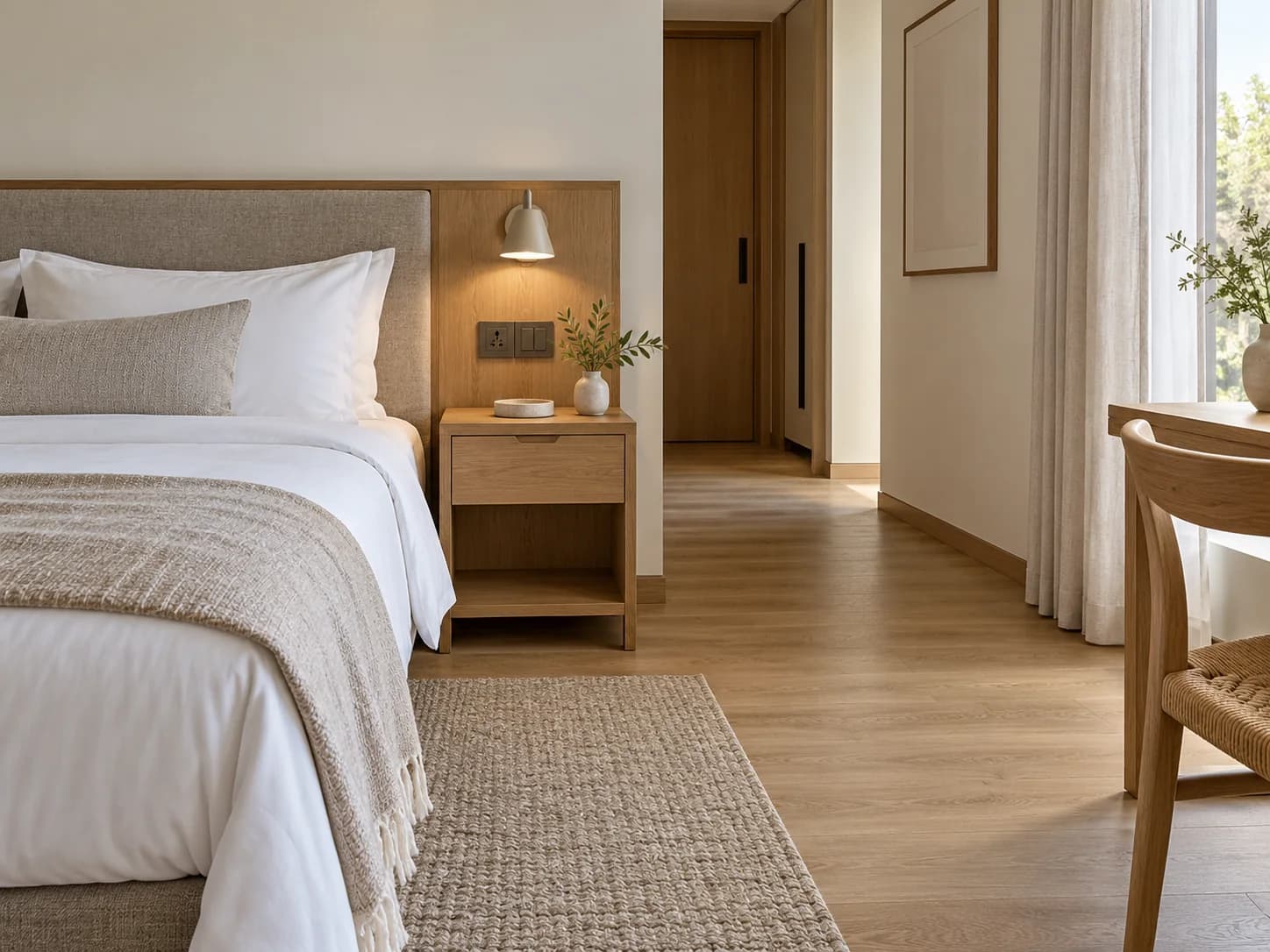
A guestroom package repeats. A minor drawer collision, an uncomfortable desk height or a finish that shows cleaning marks can affect every room. Start with a dimensioned room plan and an item schedule. Check bedside clearance, outlet access, luggage movement, door swing, housekeeping circulation and the route used to deliver furniture into the room. Compare the installed item, not just the rendering.
Stock nightstands can be sensible when their dimensions and finish work. A modified item may be enough if only a finish or height needs adjustment. Fully custom casegoods may be appropriate where headboards, wall panels, outlets and fixed services form one coordinated design. In each case, maintain a stable item code and approved drawing so a damaged unit can be replaced without reverse-engineering it years later.
As a reference for discussing fit, the archived Vivian Bedside Cabinet description gives a 455 × 455 × 550 mm footprint and a drawer plus open shelf. A project team would still need to reconfirm current dimensions, finish, drawer clearance, assembly and suitability for the hotel’s use conditions before treating it as a specified guestroom item.
Lobbies and lounges: comfort, movement and identity
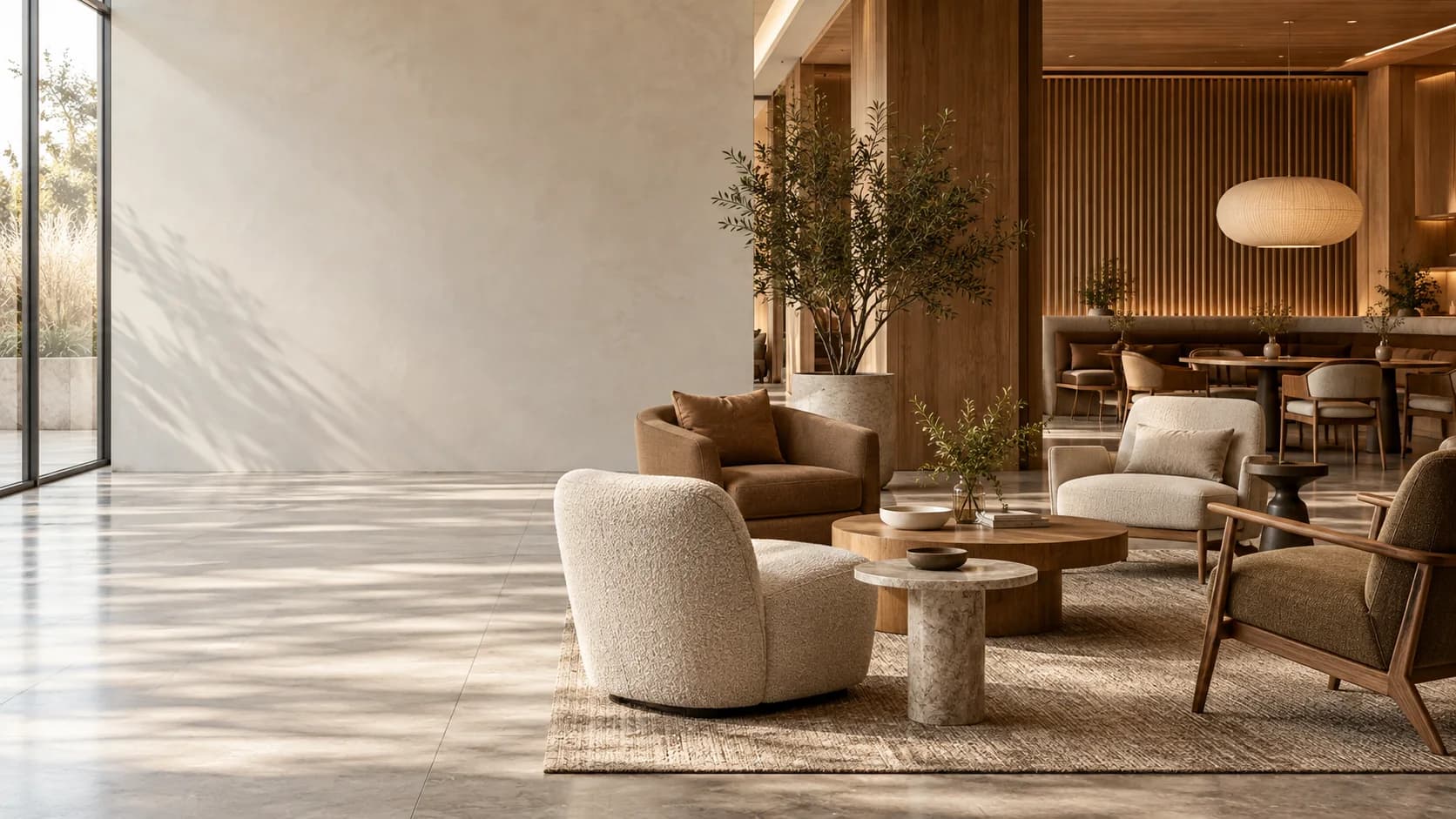
Public seating carries design weight and usually receives varied daily use. A stock lounge chair can be excellent when comfort, footprint, cleaning and replacement are suitable. A modified chair may help align upholstery with the interior palette. A fully custom chair can express a distinctive concept, but it must still be evaluated as a functional piece, not a sculpture that happens to have a seat.
Review seat height and depth, arm support, floor protection, fabric cleaning, stability and any moving mechanism. A swivel chair needs circulation around its full movement, not only its static footprint. The archived Kitty Swivel Lounge Chair is described with a 360° base and approximate overall dimensions of 930 × 960 × 850 mm. That is useful for early layout thinking; it is not evidence of commercial performance or current product compliance. Ask for the relevant construction and documentation before specifying it for a public area.
Food and beverage areas: durability and service matter
Restaurant and café furniture should be judged against the service pattern. Consider how often a chair is moved, how tables are cleaned, whether spills are likely, whether staff need to reconfigure a room and whether any extension mechanism is practical in the available space. A compact table that opens wider may be attractive in a flexible room, but the buyer should test opening clearance, support, cleaning and storage of any leaves or hardware.
The archived DIO SPACE extendable dining table is described as 130 × 80 cm when closed and Ø 130 cm when open. Those reference dimensions invite a useful question: can staff operate the table without blocking adjacent circulation, and does the open position suit the intended covers? The answer requires a room plan and a sample or verified mechanism, not a product image alone.
Back-of-house and low-visibility areas
Brand expression may be less important where the item is not part of the guest experience. A durable, maintainable stock option may free design budget for rooms or focal spaces. Still check use conditions and maintenance. The cheapest unseen item can create repeated repair work if it is unsuitable for the setting.
Build a schedule that reflects approvals, not promises
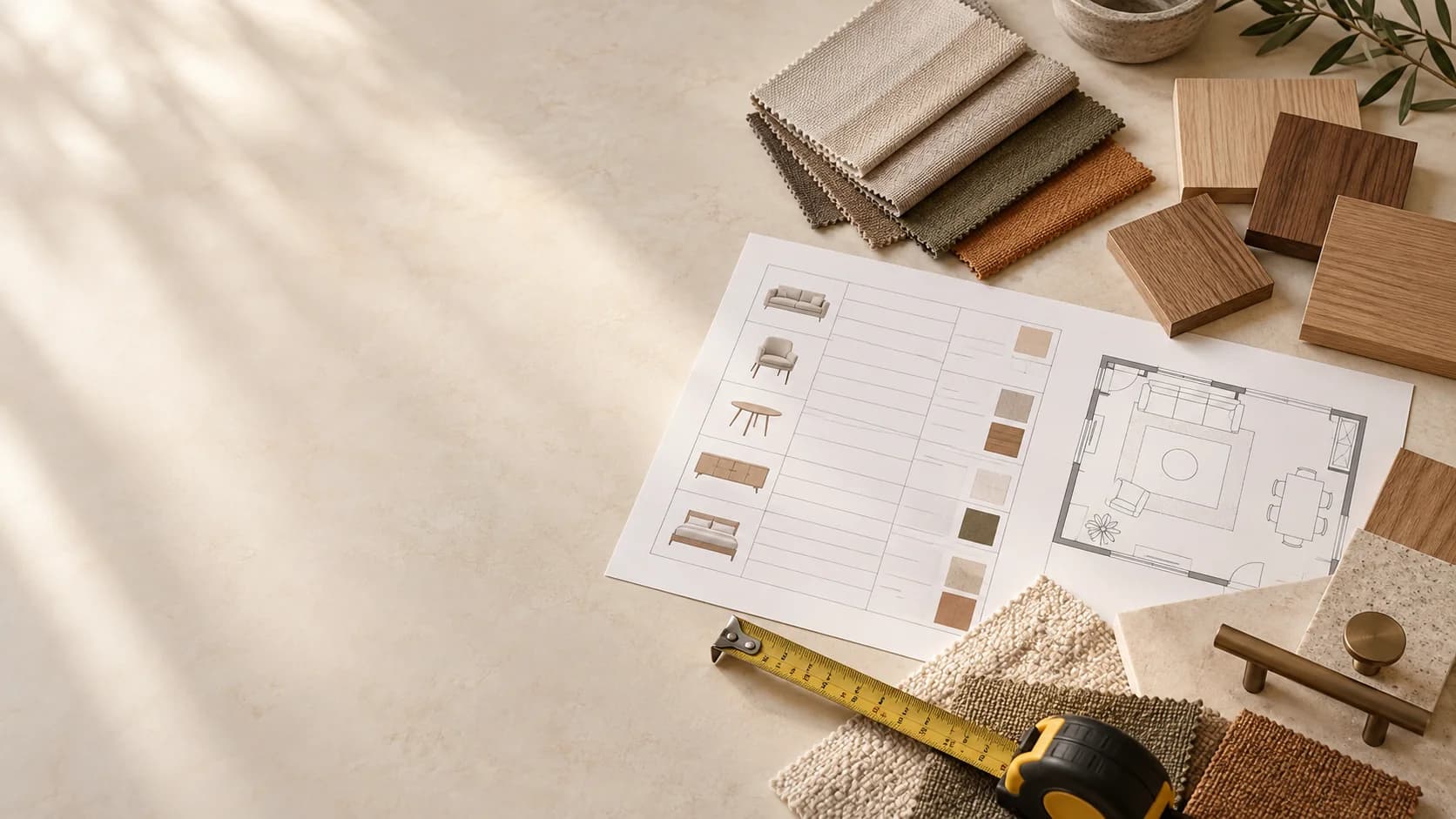
The opening date is fixed in many hospitality projects, but a furniture schedule is only credible when it includes decision gates. Work backward from installation and identify: final room survey, design freeze, material selection, sample or mock-up approval, purchase release, manufacturing, inspection, packing, freight, customs, delivery and on-site assembly. Record who is responsible for each gate.
Stock may reduce development work, but availability can change. Modified standard items can be delayed by a nonstandard material or a late finish approval. Custom work depends on drawing quality and sample release. Do not compare a stock supplier’s “available now” statement with a custom supplier’s production estimate unless both have been checked against the actual delivery destination and installation date.
If the project must be phased, ask for a room-by-room delivery schedule and label cartons by floor, zone or item code. Confirm the receiving plan with the hotel or contractor. Furniture that reaches the city on time but cannot be unloaded, stored or installed safely has not met the project need.
Evaluate total installed cost and lifecycle risk
Purchase price matters, but the hotel ultimately pays for usable furniture in place. Compare goods, sampling, freight, duties, receiving, installation, packaging disposal, spare components and replacement strategy. State the Incoterms® 2020 rule and named place in each international quotation; ICC explains that these terms allocate cost, risk and obligations, while the sale contract still needs to define the product and commercial remedies.
Then ask a second question: what will happen when one item fails or is damaged? A stock item may be replaced quickly if the model remains available. A custom item may be reproducible if drawings, finish samples and components are archived. A modified item can be troublesome if the base model or special fabric is discontinued. Ask suppliers about spare parts, component replacement, finish continuity and documentation retention without assuming any one route is automatically safer.
Use a simple risk register for critical items. Record the consequence if a product is late or fails, the likelihood based on confirmed facts, the proposed mitigation and the owner. For a signature lobby chair, an approved backup seating option may be sensible. For repeated guestroom casegoods, a complete mock-up room can reveal a dimension conflict before the issue is multiplied across the property.
Request evidence at the right level
A statement such as “tested for hotel use” is not enough. Ask what test was performed, which model and construction were tested, the date, the report provider and the outcome. The requirement should match the intended market and application. The BIFMA standards ecosystem is one possible reference for certain commercial seating contexts, but no single test automatically covers all hotel furniture or every destination. A project team should specify the applicable requirement rather than borrowing a standard name for marketing value.
For upholstered items, check that the evidence covers the relevant material combination where the project requires it. For casegoods, inspect edges, drawers, hardware and finish in the sample. For moving tables, operate the mechanism repeatedly during approval and agree how function will be checked in production. These are buyer-side verification steps, not a statement that DIO SPACE has already tested a particular product.
Photography can support inspection but should not be mistaken for a test report. Factory production images, shipment inspection photos and packing pictures are useful when they identify the actual batch and approved item codes. Generic factory imagery—especially AI-generated imagery—should never be presented as evidence of a real shipment or a passed test.
An illustrative 60-room decision exercise
Imagine a 60-room boutique hotel with a distinctive lobby and a fixed opening date. The guestroom plan repeats, but a bedside outlet sits close to the proposed cabinet. The lobby needs a memorable seating group. The back-of-house area has no special visual requirement. This is a planning illustration, not a completed DIO SPACE project.
The team might first test a stock bedside cabinet against the surveyed room. If the drawer clashes with the outlet or cleaning access is poor, a modest dimensional modification or custom cabinet could solve a repeated problem. In the lobby, it might prototype a modified lounge chair in the selected fabric, then move to fully custom only if the standard frame cannot deliver the intended proportions. For back-of-house, an available contract item may be preferable if it meets use and maintenance requirements.
The important deliverable is not a label saying “60% custom.” It is a zone-by-zone schedule that records the reason for each route, sample requirement, replacement strategy and latest decision date. This protects the design intent without treating custom production as an end in itself.
Questions to ask before issuing purchase orders
- Does each item fit the surveyed space, circulation and delivery route?
- Is the quoted construction suitable for its actual use and cleaning regime?
- Which drawings, swatches, prototypes and reports must be approved?
- What is the current availability or production schedule, and when does it start?
- How will finish and component codes be retained for later repairs or reorders?
- What does the price include through installation, and what is excluded?
- Who signs off a sample, a change request and a pre-shipment inspection?
The custom furniture RFQ checklist provides a document structure for these questions. The commercial project cost guide shows how to normalize competing offers.
FAQ
Is custom furniture always more expensive than stock?
There is no universal answer. Custom work may add development and sample cost, while unsuitable stock can create installation, replacement or maintenance costs. Compare the same specification and total installed scope. A large repeated order may change the economics, but only a project-specific quotation can establish that.
Is stock furniture suitable for a hotel?
It can be, provided the actual model fits the space and the supplier can support its intended use, cleaning needs, documentation and replacement path. “Stock” describes availability or design status, not performance by itself.
When is a modified standard product enough?
Often when the existing construction already meets the functional need and the project requires a controlled change in finish, upholstery or dimensions. Confirm whether the modification affects stability, performance evidence, packaging or future availability.
What should be checked in a mock-up room?
Check fit, door and drawer movement, access to power, cleaning clearance, visual finish under project lighting, comfort, installed height and the path used to bring furniture into the room. Record changes on a revised drawing before approving bulk production.
How can a hotel plan for future replacements?
Keep item codes, approved drawings, finish references, supplier details and relevant component information. Ask how long the supplier expects to support spare parts or repeat production, but treat that answer as a contract point rather than an indefinite promise.
Conclusion
The strongest hotel furniture package is rarely all custom or all stock. It uses the simplest route that meets each zone’s real design, operational and commercial requirements. Decide from the room plan outward: verify fit, confirm performance, approve a sample where necessary, compare total installed scope and preserve information needed for replacements. That creates a clearer basis for procurement than either a catalogue photograph or a custom label alone.