Introduction
“How much does custom furniture cost?” is usually the first question a project buyer asks and one of the hardest to answer responsibly. A lounge chair can look similar in two quotations while the frame, upholstery, foam, swivel hardware, packaging and testing assumptions differ. Two bedside cabinets may share exterior dimensions but use different internal construction, drawer runners and finishes. Even identical products can produce different delivered costs when one offer covers export packing and the other stops at the factory gate.
This guide is written for importers, interior designers, hotel procurement teams and distributors preparing a commercial furniture order. It does not publish indicative prices that could be mistaken for current factory offers. Instead, it explains the cost drivers, shows how to structure a like-for-like comparison, and identifies the evidence worth requesting before a deposit or production approval.
The examples below are planning scenarios, not claims about completed DIO SPACE projects. Product references are based on archived product information and must be reconfirmed for a live order. That distinction matters: a practical buying guide should help you ask better questions without inventing factory test results, lead times or project outcomes.
Why a single “custom furniture price” is misleading
A commercial project may contain three different kinds of work. A catalogue selection uses an existing design with a specified finish. A modified design changes dimensions, material or details around a known construction. A new design may require engineering, drawings, tooling, a prototype and additional approvals. These are different scopes even if the finished pieces look similar in a rendering.
Unit price is also only one component of project cost. The buyer may have to fund samples, testing, packaging, freight, duties, receiving, installation, spare components and future replacements. In a hotel or apartment project, a low-priced item that arrives damaged, cannot pass through a service lift or cannot be reordered in a consistent finish can become expensive after purchase.
The most useful opening question is therefore: “What exactly is included in this quotation, and what evidence supports each assumption?” A supplier who asks for drawings, quantities, destination and application before issuing a firm quote is helping you reduce uncertainty.
The eight variables that change a furniture quotation
1. Design maturity and drawing quality
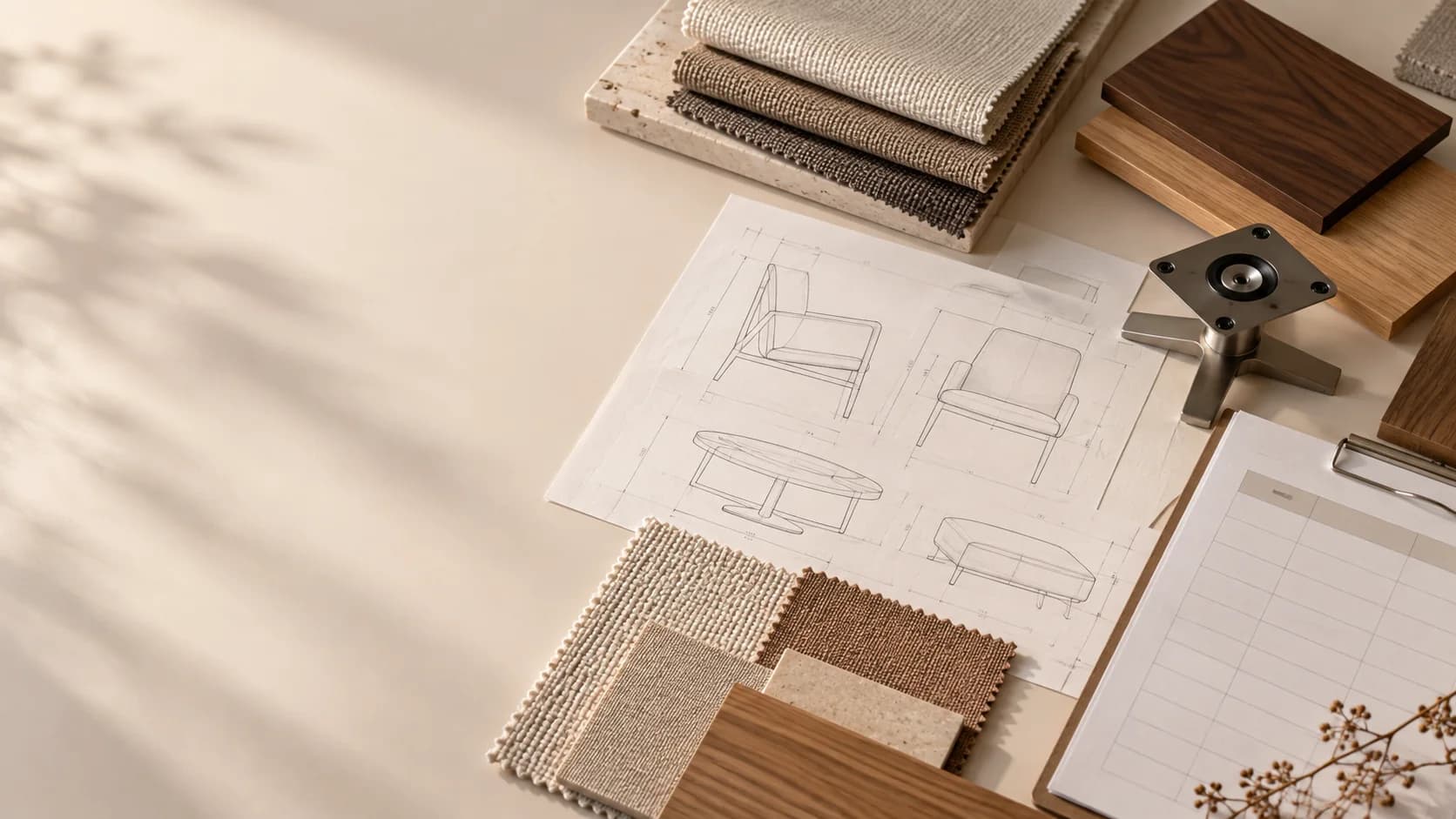
A dimensioned drawing, approved reference photo and clear material schedule give a manufacturer less room to guess. If the design exists only as a mood board, the first offer should be treated as a budget estimate, not a production-ready price. State which measurements are critical: overall width, seat height, clearance around doors, table extension diameter, drawer opening, or the footprint of a swivel chair in use.
For repeat items, add a revision number to each drawing. A quotation based on revision A cannot be fairly compared with another based on revision C. Ask the supplier to identify its drawing revision on the offer and list any assumptions it has made. Once a sample is approved, record the approved design so a later production batch does not drift from it.
2. Materials, construction and finish
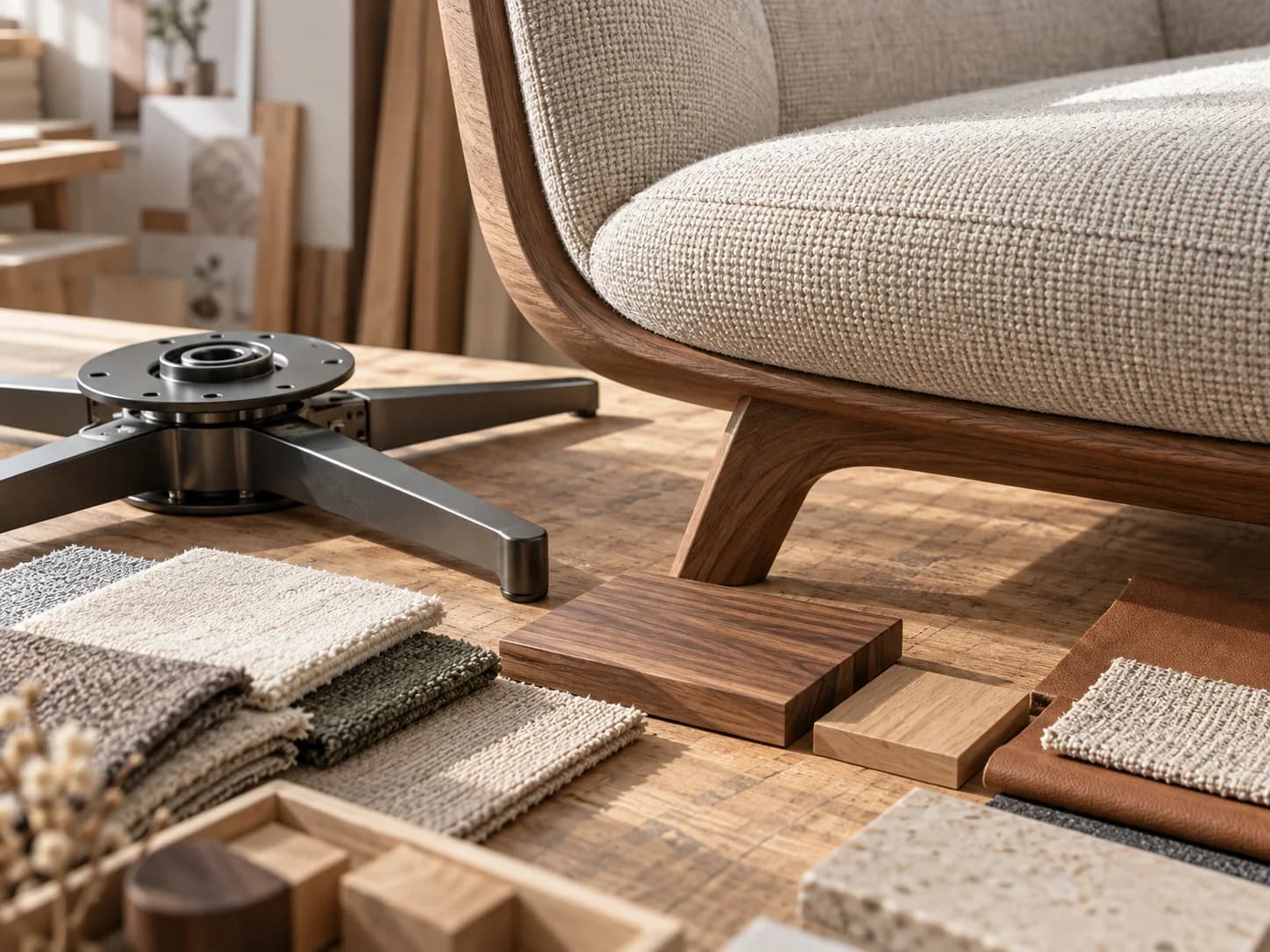
“Wood,” “fabric” and “stone” are not sufficient specifications. A cabinet quote should identify the structural frame or substrate, visible veneer or finish, edge construction, hardware and the surfaces that will contact cleaning products. Upholstered seating should distinguish frame, suspension, foam or filling, upholstery and moving parts. A dining table should state the top material and thickness, base construction, extension mechanism, edge treatment and assembly method.
Substitution can be reasonable when a material is unavailable, but it should be proposed explicitly. Ask whether the alternative changes appearance, maintenance, performance, lead time or price. If timber certification or a particular performance standard matters, request the applicable documentation for the actual product and supply chain rather than accepting a generic company claim.
3. Quantity and production repetition
A one-off sample and a repeat order do not carry the same setup cost per unit. Repetition may allow material planning, cutting efficiency and consistent packaging. Yet quantity discounts are not automatic: mixed finishes, many small variants and phased releases can reduce that efficiency. Share the quantity by model and finish, the forecast for later releases, and the number of pieces required in each shipment.
Do not assume an advertised minimum order quantity applies to every design. Ask for the quantity at which a particular material, fabric color or hardware option becomes feasible. A supplier may quote the base model at one volume and a nonstandard finish at another.
4. Sampling and approval work
The sample plan affects both direct cost and schedule. A finish chip may be enough to approve a stain. A moving table mechanism may need a functional sample. A lounge chair may require an upholstered prototype so the buyer can check seat feel, proportions, swivel movement and fabric appearance under project lighting.
Specify who pays for each sample, whether the sample cost is credited against a bulk order, how many revision rounds are included, and whether destructive testing—if required—is part of the offer. More importantly, define who approves the sample and how approval is documented. “Looks good in photos” is a weak substitute for signed dimensions, material references and agreed inspection criteria.
5. Performance and market-specific compliance
Performance requirements depend on application and destination. A guestroom nightstand, a public-area lounge chair and a private residence do not necessarily need the same evidence. Tell suppliers where the furniture will be used, how it will be cleaned and whether the buyer has a specified test method or local requirement. The supplier should confirm what can be supported for the exact construction being quoted.
Avoid vague requirements such as “hotel grade” or “international standard.” Name the test or documentary evidence your project actually requires, and confirm which material combination or finished item it covers. Do not infer that a fabric certificate proves the complete upholstered chair complies with a project requirement.
6. Export packaging and container efficiency
Furniture can be vulnerable to corner damage, surface abrasion, moisture, pressure and movement during handling. A quote should state whether each piece is fully assembled, partly knocked down or flat packed; the carton dimensions and gross weight; protective materials; and any pallet or crate assumptions. The packaging method influences freight volume and on-site assembly.
For solid-wood pallets or other regulated wood packaging used in international trade, the relevant phytosanitary framework is ISPM 15. Ask the supplier and forwarder which packaging material will be used and which markings or documents the destination requires. This is a packaging question, not a claim that the furniture itself has a certification.
7. Delivery term, destination and local handling
Ask for the named place and the exact Incoterms® 2020 rule in every international quotation. The International Chamber of Commerce explains that these rules allocate cost, risk and obligations between buyer and seller; they do not replace the sale contract. A price described only as “FOB” or “delivered” leaves important details unresolved.
Keep freight, insurance, customs duties, taxes, inland transport, unloading, storage and installation on a separate comparison sheet where appropriate. Obtain current estimates from qualified logistics partners for your destination. Avoid assuming the factory unit price predicts the final landed or installed cost.
8. Change control and replacement needs
Late changes to dimensions, finish or quantity can alter material orders, packaging and production sequence. Record a cut-off for revisions and a method for approving changes in writing. For hospitality and multifamily projects, ask how replacement components or additional units would be identified later: model reference, finish code, drawing revision and retained sample matter more than a memorable marketing name.
A practical comparison: two quotes for the same project
Consider a hypothetical project with 40 bedside cabinets and 12 lounge chairs. Supplier A offers a lower unit price but assumes a standard fabric, factory-gate collection and basic cartons. Supplier B includes a specified upholstery, approved finish samples, export packing and a named shipping term. Without normalization, the two offers answer different questions.
Create a comparison sheet with one row for each model and these columns: approved revision; quantity; material and hardware; sample scope; test evidence; packaging; unit price; one-time charges; delivery rule and named place; estimated freight; installation scope; warranty terms; and exclusions. Mark each cell included, excluded, to be confirmed or not applicable. Request clarification before assigning a supplier score to a blank cell.
The decision may still favor Supplier A. The point is to make that decision knowingly. If the buyer will source fabric, arrange export packing and book freight separately, those costs belong in the project budget. If Supplier B proposes a stronger construction, ask how that difference affects the actual application instead of treating “higher quality” as a self-explanatory premium.
From unit price to landed project cost
Use a simple calculation framework, even when some numbers remain open:
Estimated landed project cost = quoted goods + one-time development or sample charges + agreed packing + freight and insurance + import-related costs + inland handling + installation + contingency.
Do not combine confirmed prices and unverified allowances in a single unlabeled total. Show the source and date of each number. Freight and duty assumptions can change; so can the number of cartons if the final product dimensions or packing method change. If a quote is in a different currency from the project budget, state the exchange-rate assumption and who bears exchange-rate risk.
The most overlooked cost is sometimes a delay rather than a charge. A chair that cannot enter a lift, a table delivered without the correct assembly hardware or a cabinet whose drawer cannot clear adjacent millwork can block installation. Before ordering, compare carton and assembled dimensions with access routes and the final room plan.
How to reduce cost without reducing fitness for purpose
Cost engineering should preserve the requirements that make the furniture suitable for its setting. Start by separating essential from optional features. A visible timber finish may be central to the design; a hidden panel finish may not be. A swivel base may be essential in a lounge layout; a special decorative seam may be optional. Document these choices before asking for alternatives.
Next, standardize where it helps. Repeat a small number of approved fabrics and finishes across compatible models. Reduce avoidable size variants, but do not force one dimension into rooms where it will obstruct circulation. Coordinate hardware and replacement parts across a package where feasible. Ask for a costed option, not a silent downgrade.
Finally, lock decisions in the right order. Approve layouts and critical dimensions before sampling. Approve materials and finish references before bulk purchase. Approve the production sample before the factory produces the full batch. Every approval should carry a date and revision reference.
Factory checks and shipment inspection: what to request
Do not accept a promise of “100% quality” in place of a defined inspection plan. Agree on checkpoints appropriate to the product: incoming material identification; critical dimensions during production; mechanism function; upholstery appearance; finish consistency; packing protection; and carton labels. Decide which checks are performed by the supplier, which require buyer review, and whether an independent inspection is warranted.
For a swivel lounge chair, a buyer might request a documented check of free rotation, stability and visible upholstery defects on an approved sample. For an extendable dining table, the sample review should include opening and closing the mechanism, checking the closed and open dimensions, and confirming the locking or support arrangement. These are examples of checks to specify, not claims that DIO SPACE has performed a particular test on the products shown online.
Before shipment, reconcile the approved item schedule against the packing list and photo records. Ask for carton count, dimensions, gross weight, product codes and finish identifiers. Agree on how damage, shortage or a failed inspection will be documented and resolved. A shipment inspection is useful only when acceptance criteria were agreed before the goods were packed.
What to send with a pricing request
A concise package can make the first supplier response much more useful:
- Project type, target country and expected delivery location.
- Item schedule with product name, quantity by finish and phased release needs.
- Drawings or references with critical dimensions and revision dates.
- Material, finish and hardware requirements, with permitted alternatives.
- Application notes: public or private space, cleaning method and expected use.
- Required samples, testing evidence and inspection checkpoints.
- Packaging, assembly and installation assumptions.
- Requested trade term with a named place, plus target decision and delivery dates.
If some details are unknown, label them as open decisions. A responsible supplier can then separate a budget estimate from a firm production quotation. Our custom furniture RFQ checklist explains how to build this package in more detail. You can also examine the reference details for the Kitty Swivel Lounge Chair and Vivian Bedside Cabinet before asking which specifications are current.
FAQ
Can a supplier quote from a reference photo alone?
Yes, but treat the result as a preliminary estimate. A photograph rarely reveals internal construction, dimensions, material grades or packaging. Ask the supplier to list assumptions and state which drawings or samples would be needed for a firm offer.
Does a larger order always reduce the unit price?
No. Repetition can spread setup work across more units, but multiple finishes, special hardware, split shipments or a costly material may offset that benefit. Request price breaks for the actual product and release pattern rather than assuming a universal discount.
Should I compare FOB and DAP offers directly?
Not without normalizing the scope. The named rule and place affect which party arranges and pays for specific steps. Use the ICC guidance on Incoterms® 2020 and obtain current logistics estimates before comparing landed cost.
Are testing and inspection always included?
No. Ask what the quotation includes: internal quality checks, physical sample review, laboratory testing, third-party inspection or pre-shipment verification. The answer depends on the product, destination and contract. Written acceptance criteria are more useful than an undefined “tested” label.
When should the buyer approve the final price?
Approve a commercial offer once its scope, drawing revision, specification, sample plan, quantity, packaging, trade term, payment terms and exclusions are understood. If the design remains open, agree how a later change will affect price and schedule.
Conclusion
The best custom furniture quotation is not simply the lowest number. It is an offer you can trace back to a defined product, an approved revision and a clear delivery scope. Build one comparison sheet, identify open assumptions early and ask for evidence that matches the actual use of each item. That approach gives designers room to protect the intended look while giving procurement teams a defensible basis for a decision.