
Introduction
For a custom furniture buyer, the first supplier email is often short: “Please quote 80 lounge chairs and 80 bedside cabinets for a hotel.” It may be enough to start a conversation, but it is not enough to obtain two comparable offers. One supplier might assume a residential chair frame and standard carton. Another may price a specified fabric, a functional sample and export packing. Both quotations could be reasonable responses to the same vague request—and almost impossible to evaluate side by side.
An RFQ, or request for quotation, solves that problem by fixing the question before you compare the answers. It gives a manufacturer a common brief and makes the remaining unknowns visible. This article is for importers, distributors, interior designers and project procurement teams that need furniture made, modified or supplied for commercial use.
The checklist is practical rather than performative. It does not assume that every project needs an extensive technical manual or a third-party test for every item. It does ask for the information that changes price, suitability, risk or delivery. Examples involving DIO SPACE products use archived online descriptions as reference points; current specifications and availability must be confirmed for a live order.
Start with a one-page project control sheet
Before the item-by-item schedule, give suppliers the project context on one page. Include the buyer organization and decision contact, target market, type of space, target delivery location, anticipated order date and the date by which the quote is needed. State whether the request is for a planning budget, prototype, initial production order or repeat program. A budget estimate should not be confused with a final production quotation.
Define who will approve the design. In a hotel project, the interior designer may approve appearance, the operator may approve cleaning and replacement requirements, and the purchasing team may approve cost and contract terms. If these roles are not aligned, a supplier can receive contradictory instructions late in the process. Name the decision owner and establish how revisions will be communicated.
Add a short list of documents supplied with the RFQ: furniture schedule, plans, elevations, reference photographs, material palette, finish samples, room mock-up requirements and destination-specific specifications. Give each document a filename and revision. If a drawing is still being developed, write “preliminary” rather than allowing a supplier to assume it is approved for production.
Build an item schedule that can be priced
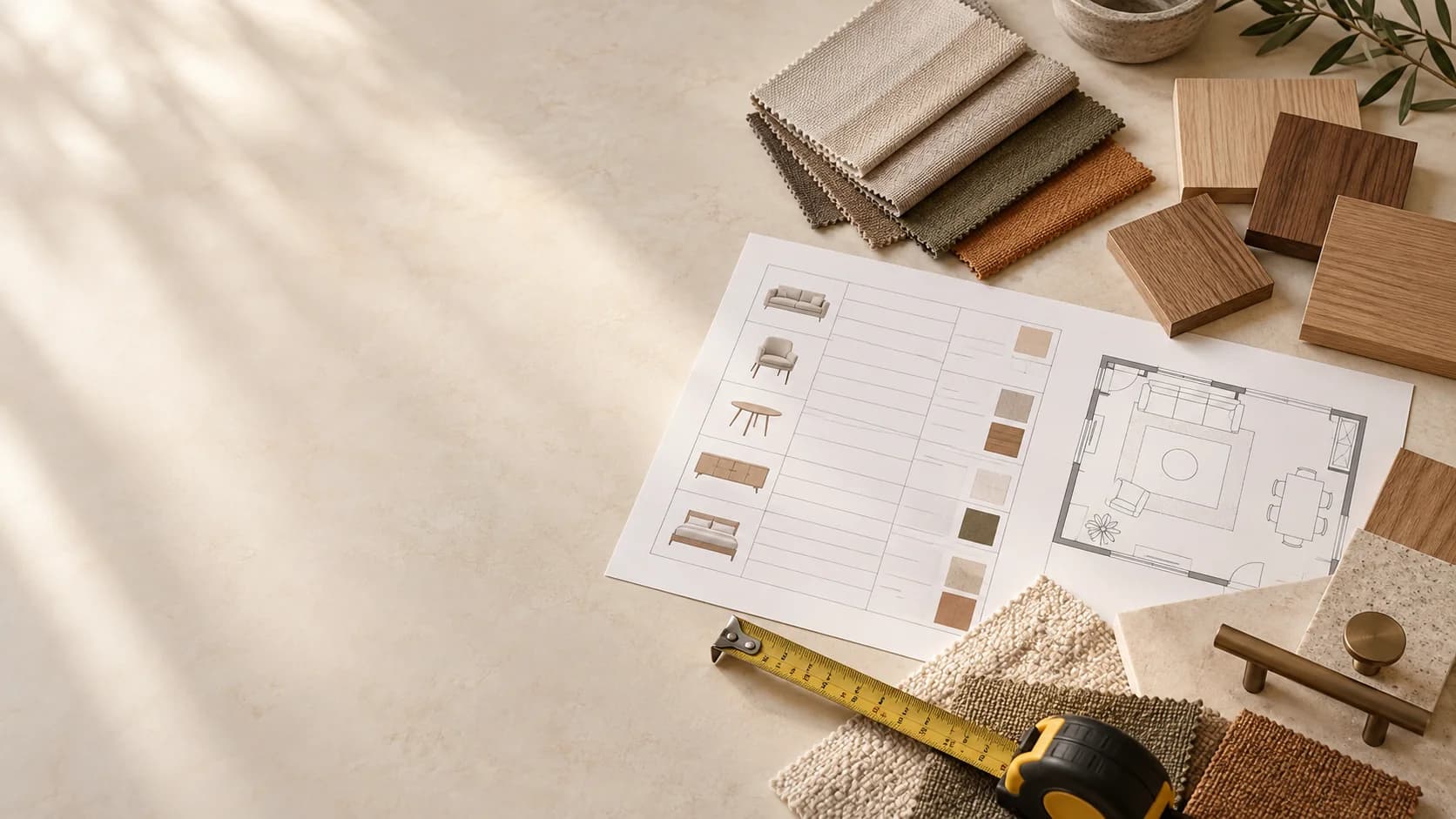
The item schedule is the backbone of the RFQ. Give each item an identifier that will remain stable through quotation, sample approval, packing and installation. A compact schedule might contain:
| Field | What the buyer should state |
|---|---|
| Item code | A unique buyer code, not only a product nickname |
| Description | Type of chair, table, cabinet or other item |
| Intended setting | Guestroom, lobby, apartment, café or another space |
| Quantity | Total, quantity by finish, and planned release phases |
| Critical dimensions | Dimensions that affect fit, use or access |
| Materials and finish | Specified materials, acceptable alternatives and references |
| Drawings | File and revision number |
| Assembly | Fully assembled, knock-down or site assembled |
| Destination | Country, receiving location and access constraints |
Do not force all requirements into a single cell. Link the item code to a short specification sheet when a product needs additional detail. A chair may require a fabric schedule, a table a mechanism drawing, and a cabinet a hardware and finish schedule. A supplier should be able to see which requirements apply to which item.
Record dimensions in the way the product is used
Overall width, depth and height are a start, but they rarely tell the whole story. For lounge seating, ask about seat height, seat depth, arm clearance and the space required when a chair swivels. For a dining table, record both closed and open footprints, assembly clearance and the position of the base. For a bedside cabinet, record drawer travel and the clearance from adjacent bed frames or wall panels.
As a concrete reference, the archived DIO SPACE post for the Kitty Swivel Lounge Chair lists approximately 930 × 960 × 850 mm and a 360° swivel base. Those details help a designer assess footprint, but they are not a complete manufacturing specification. An RFQ would still need to define the upholstery, internal construction, finish, required use conditions and current verified dimensions.
Specify materials and acceptable alternatives
“Similar to the photo” is useful as a design direction but weak as a purchasing requirement. A furniture RFQ should separate appearance from construction. State the visible material or finish, the structural material where relevant, hardware, upholstery and cleaning expectations. If natural grain variation is acceptable, say so and approve a range sample. If color consistency across rooms matters, define a reference sample and viewing conditions.
Buyers sometimes name a proprietary material that is unavailable to a supplier. Write whether an alternative is prohibited, allowed only after approval, or welcome as a separately priced option. Ask the supplier to show the proposed alternative, reason for the change and implications for appearance, performance, maintenance, lead time and cost. Never allow a lower quote to hide a material substitution that the operator will discover only after delivery.
For upholstered furniture, distinguish the selected textile from the whole chair. A fabric’s marketing description does not establish the performance of the finished item. Ask for the product-specific information your application and market require, and confirm whether the same construction was used for any test evidence submitted. For cabinets and tables, request information about exposed edges, finish repair and high-wear surfaces rather than relying on a broad “commercial grade” label.
Describe the application and required evidence
The same design can behave differently in a private guestroom and a busy lobby. Give the supplier a plain-language description of the environment: expected use, potential exposure to cleaning products, whether furniture will be moved frequently, and whether it will be installed near moisture or strong sunlight. This helps a supplier propose suitable materials and identify limitations before the quote is accepted.
If a project specification or destination market calls for testing, name the exact requirement and the item or material to which it applies. Do not ask for “all international certifications.” That phrase is too vague to price and too easy to satisfy with unrelated documents. Request the test report, issue date, tested configuration and scope. Where an independent laboratory or authority is required by the project, name it in the RFQ.
Supplier experience claims also deserve evidence. Instead of asking whether a supplier has “hotel experience,” request examples of relevant item types, product drawings, sample photographs or packing methods that can be shared with permission. Keep confidential client identities out of the request unless the supplier is authorized to disclose them. A small set of verifiable details is more useful than an uncheckable list of logos.
Define the sample and approval path
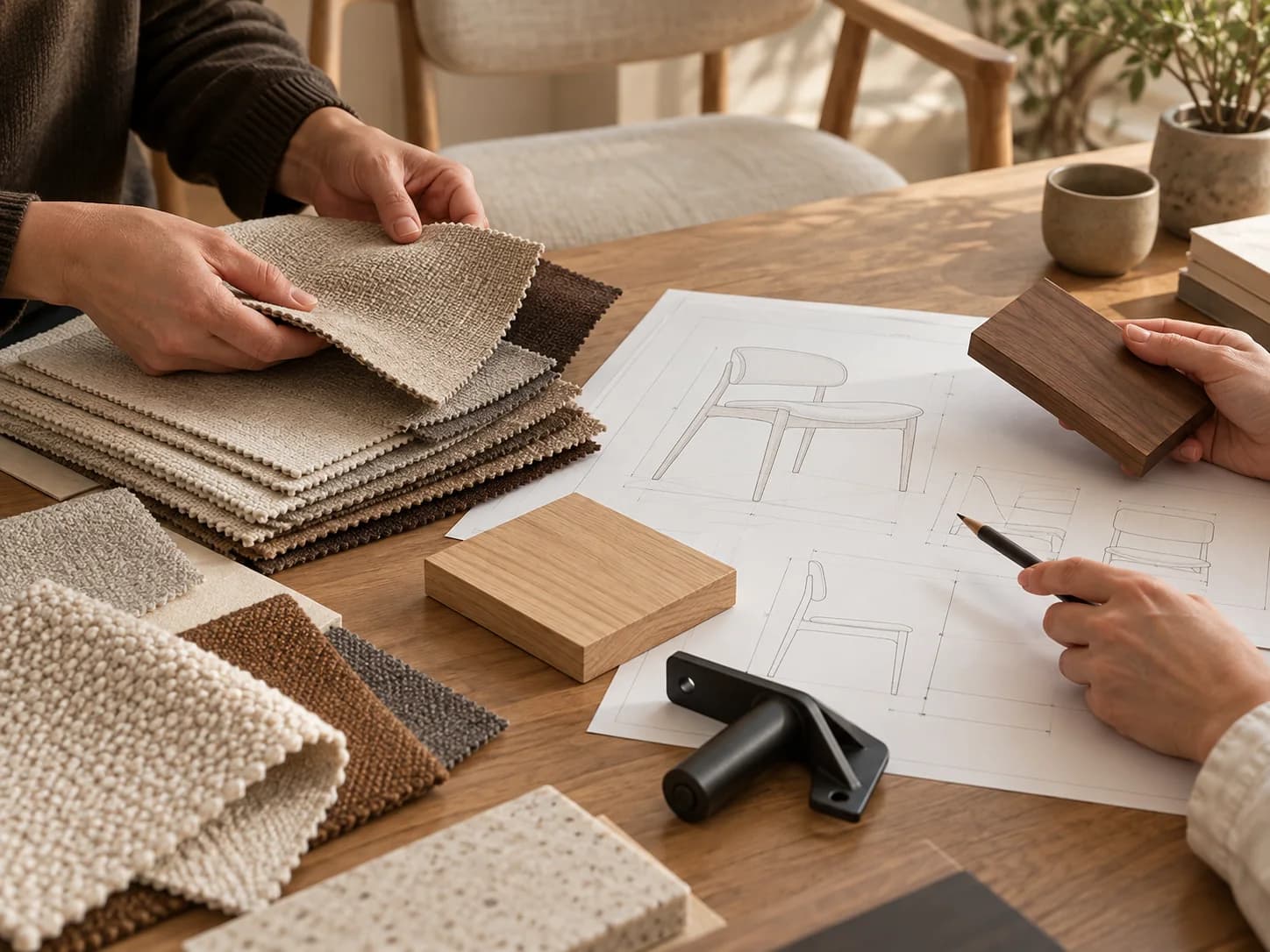
An RFQ should say what must be approved before bulk production. Possible approvals include finish chips, fabric swatches, hardware samples, a full-size prototype, a mock-up room and final shop drawings. Not every item needs every approval, but each item should have an agreed release point. A purchase order placed before the design is frozen should state how later decisions will affect price and schedule.
For a moving product such as an extendable table, a photograph is not enough to evaluate the extension mechanism. In a sample review, check the closed and open dimensions, ease of movement, stability in both configurations, locking or support details, edge alignment and protection of the finish during use. The archived DIO SPACE extendable dining table is described as 130 × 80 cm when closed, Ø 130 cm when open and 75 cm high. Treat those as reference dimensions until reconfirmed on the current drawing and sample.
For an upholstered chair, evaluate visible seams, fabric direction, seat feel, arm support, swivel action and floor protection. Record the approved sample’s dimensions and materials, not merely the phrase “sample approved.” Determine whether the sample becomes the control reference for production and who retains it.
Ask suppliers to separate price from scope
Request the same price format from every supplier. The response should show the unit price by item and finish, one-time sample or development charges, packaging, optional alternatives, testing or inspection charges if applicable, and the validity period of the offer. Ask the supplier to list exclusions and assumptions immediately below the quoted price—not in a later email.
For international buying, name the requested delivery rule and place. ICC’s Incoterms® 2020 guidance explains how rules allocate cost, risk and obligations. “FOB China” is less useful than a correctly selected rule with a named port or place; the best rule depends on the transport arrangement. The terms do not replace a contract that defines specification, payment, acceptance and remedies.
Ask for production, packing and dispatch milestones separately. A single “lead time” figure can conceal whether it starts after deposit, material approval, sample sign-off or drawing release. If the project has phased delivery, show the quantity and required date for each phase. A supplier should be allowed to flag an unrealistic date rather than promise it without a credible plan.
Make packaging and installation part of the RFQ
Packaging should suit both transport and the installation site. State whether the product must be delivered assembled or whether local assembly is possible. Ask for packed dimensions, gross weight, carton count per item, protective materials, lifting points if relevant, hardware packs and carton labels. Confirm that the packed unit can pass through loading doors, lifts, corridors and room entrances.
If regulated solid-wood packaging is proposed, ask the supplier and freight forwarder how the relevant destination requirements will be met. The International Plant Protection Convention’s ISPM 15 guidance applies to wood packaging material used in international trade. The buyer should not assume that a generic statement about “export packing” covers every destination or every packaging component.
Installation preparation can change the design. If a table base must be attached on site, specify the required tools and access. If a cabinet will be fixed to a wall or millwork, identify the receiving substrate and who is responsible for anchors. If furniture will be brought through an occupied hotel, consider timing, debris control and packaging removal. These are project coordination questions, not simply logistics afterthoughts.
Set inspection and change-control expectations
Quality control works best when the buyer defines acceptance criteria before production. Ask for a proposed inspection plan appropriate to each item: critical dimensions, finish appearance, function, upholstery defects, assembly hardware and packing. Decide whether a buyer representative or independent inspector will review a sample or the completed batch. Identify what evidence should be sent before dispatch: photos, measurement records, packing list and any required test reports.
Do not write “factory tested” into marketing copy unless you can show what was tested, on which configuration, when and by whom. The RFQ can request those records; it cannot assume they already exist. A meaningful test is tied to a defined requirement and pass criterion.
Maintain a simple change log with date, item code, drawing revision, requested change, price effect, schedule effect and approver. If a change affects a shared component, list all affected products. This protects both buyer and supplier: it reduces the risk of making one batch to an old drawing while another batch uses the new one.
A model supplier-response table
Give each bidder a table with the same columns: item code; proposed specification; quantity; unit price; sample charge; included testing or documentation; packing method; trade term and named place; production milestone; quote validity; exclusions; and alternative options. Require a written response for every line. “To be confirmed” is acceptable where genuine; a blank cell should trigger clarification.
Then score offers against the project’s real priorities. Suitability for use and compliance may be pass/fail requirements. Appearance, serviceability, sample quality, price and schedule can be weighted according to the buyer’s project. Compare the total commercial project cost after normalizing freight, handling and excluded services. The cheapest unit price is not automatically the cheapest installed outcome.
FAQ
Do I need final CAD drawings before sending a furniture RFQ?
No. Send the best information available and state whether the request is for a budget estimate or a production quote. Include critical dimensions and references. Ask the supplier to identify assumptions and list the drawings needed before sampling or bulk production.
How detailed should a hotel furniture RFQ be?
Detailed enough that every supplier quotes the same application and delivery scope. Focus on item schedule, dimensions, materials, finish, quantities, performance needs, sample approvals, packing and destination. Do not add tests or certifications that the project does not require.
Can I request alternatives to reduce cost?
Yes. Keep the specified option as the base quote and ask for separately priced alternatives. Require each alternative to explain changes in appearance, performance, cleaning, availability and schedule. The buyer can then approve a deliberate value-engineering decision.
What should I check before approving bulk production?
Confirm the latest drawing revision, approved samples, final materials and finishes, quantities by variant, acceptance criteria, packaging and agreed commercial terms. Record who has authority to release production and how later changes will be handled.
Is a pre-shipment inspection enough to ensure quality?
No single inspection can repair a weak specification or an unapproved sample. Use pre-shipment inspection as one checkpoint within a plan that includes design approval, material verification, process checks where appropriate and clear acceptance criteria.
Conclusion
A good RFQ makes differences visible. It gives suppliers enough information to propose a fit-for-purpose product, lets buyers compare the same scope and creates a reference for sample approval and shipment inspection. The best document is not the thickest one; it is the one that makes decisions, unknowns and responsibilities clear before money and time are committed.